The Quick Answer: No, buying ink cartridges isn't a legal scam, but the outrage over high prices is entirely justified. The premium cost isn't a reflection of the liquid's raw material value; instead, it is a calculated result of the classic "Razor and Blades" business model combined with heavy R&D costs and digital lock-in tactics. Fortunately, users can reclaim control over their printing costs through smart hardware choices, reliable alternatives, and matching the right printer type to their actual volume needs.
The Razor and Blades Business Model
Every time you buy a piece of tech, you expect the price tag to reflect what it cost to make, plus a little extra for the company’s profit. With printers, that logic gets turned upside down. To understand why cartridges cost so much, we have to look at the clever retail strategy happening behind the scenes.
Subsidized Printer, Premium Cartridge
Have you ever wondered how a brand-new, highly complex machine packed with Wi-Fi chips, scanners, and moving parts can sell for $200? The answer is simple: the manufacturer is likely losing money on that sale.
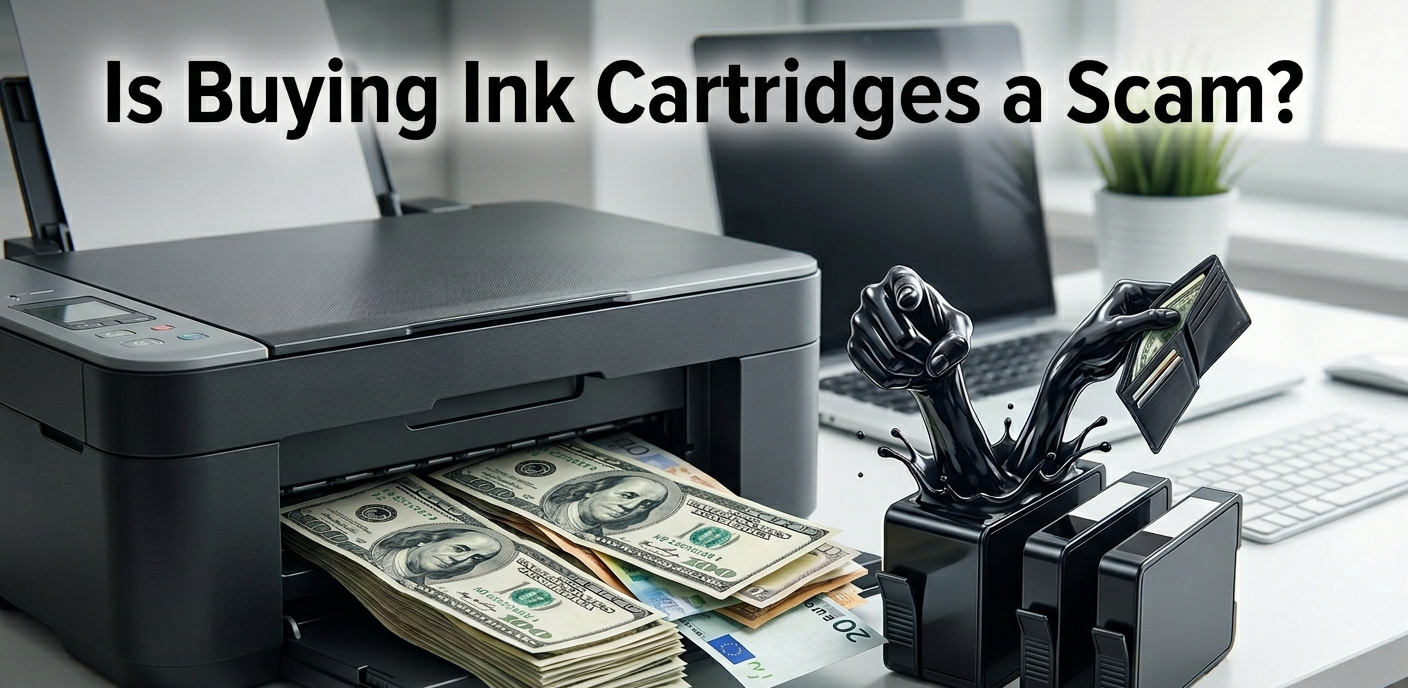
This is the classic razor and blades business model in action. Named after the famous grooming strategy—where a company sells you a sleek razor handle for next to nothing, then charges you a premium for the replacement blades—printer companies use the exact same playbook.
The printer itself is just the bait. The real product is the ink you are forced to buy over the next three to five years. Because the initial hardware is subsidized, the manufacturer has to make that money back. They do this by marking up the price of the replacement liquid, turning what should be an affordable utility into expensive printer ink.
The Tech Inside the Cartridge: R&D or Digital Lock-In?
The big printer brands often argue that ink is expensive because it requires millions of dollars in research and development (R&D). They claim the liquid is a highly advanced chemical formula designed not to smudge, fade, or clog the microscopic nozzles in your printhead. While there is some truth to the science, it doesn't fully justify the massive price gap.
The real culprit behind the high prices is digital lock-in tactics. Modern cartridges are no longer just plastic tanks of ink; they are equipped with smart microchips. These chips communicate directly with your printer to do a few specific things:
Track ink levels (though sometimes they warn you it is "empty" when plenty of liquid remains).
Run automatic firmware updates that can suddenly block third-party supplies.
Laser vs. Inkjet vs. Ink Tank: Finding Your Real-World Fit
Getting your printing costs under control requires looking past the price of the cartridge. You need to understand the technology inside your machine and how it fits your daily habits. If your printing device does not match your actual workload, you will end up spending too much money.
Cost Per Page
When choosing a printer, many people make the mistake of only looking at the retail price of the machine. Traditional inkjet printers are incredibly cheap upfront, but they use liquid ink that can run out quickly or dry up if left idle. Laser printers, on the other hand, cost more upfront but use toner powder, which lasts much longer and never dries out.To see how this impacts your wallet, you need to look at the laser printer vs inkjet cost per page.
While inkjets offer lower upfront machine costs, laser printers give you a significantly lower cost per page and require less frequent maintenance. For home offices and small businesses that primarily print text documents, a laser printer often delivers much better long-term value.
The Ink Tank Trap: When High-Volume Systems Go Idle
In recent years, a new option has become very popular: high-capacity ink tank printers. Instead of small cartridges, these machines use large build-in tanks that you refill from bottles. Printer companies advertise these systems based on extreme cost efficiency and massive page yields.
However, these printers can turn into a trap if they are used in the wrong environment.
When you’re running a business, your time is literally money. You need a setup that is "plug-and-play," not "plug-and-pray."
The Usability Gap: Ink tank systems rely on a continuous, heavy flow of liquid through their internal tubes. When a home user or remote worker leaves an ink tank printer idle for weeks at a time, the ink stops flowing smoothly.
This lack of use causes major performance issues:
The printheads get clogged with dried ink.
The machine is forced to run heavy, automated cleaning cycles to clear the lines.
It is a mismatch that ruins your printing solutions savings. If you print infrequently, standard cartridges or laser toner are a much safer, more reliable choice.
Smart Printer Ink Alternatives
You do not have to feel trapped by the expensive rules of the "Razor and Blades" model. As a consumer, you have the right to look for transparency, value, and control over your own wallet. The easiest way to get that control back is by opening your office to high-quality third-party printing options.
Legally, using a high-quality alternative cartridge does not void your printer's hardware warranty. By choosing reliable generic alternatives, you instantly break the digital lock-in and open the door to massive printing solutions savings.
Why G&G Compatible Ink Cartridges Are the Smart Choice
Of course, not all alternative cartridges are made equal. If you want true control, you need a trusted partner.
This is exactly where the G&G compatible ink cartridge stands out as the ultimate smart choice for home users and small business offices.
Perfect Software Compatibility: Their custom-engineered smart chips talk smoothly to your printer, meaning you can bypass those annoying error messages and track your ink levels accurately.
No Price Premium: You get crisp, sharp text and rich images that match the print quality of the original brands, but without the premium price tag.
Eco-Friendly and Reliable: G&G products are manufactured in state-of-the-art facilities under strict global quality standards, ensuring your cartridge won't leak or jam your machine.
Your Action Plan for Smarter Printing
Taking back control of your printing costs comes down to making informed, intentional choices. You do not have to accept high prices as a fact of life. Instead, use this simple checklist to transform how your home or office handles printing:
Match the Machine to Your Habits: If you print small text documents once every few weeks, avoid high-volume ink tank systems that clog when left idle. Stick to a reliable laser printer or a standard inkjet paired with smart cartridge choices.
Calculate Long-Term Value: Look past the cheap price tag of a new printer. Before you buy, check the real cost per page to make sure the machine won't break your budget down the road.