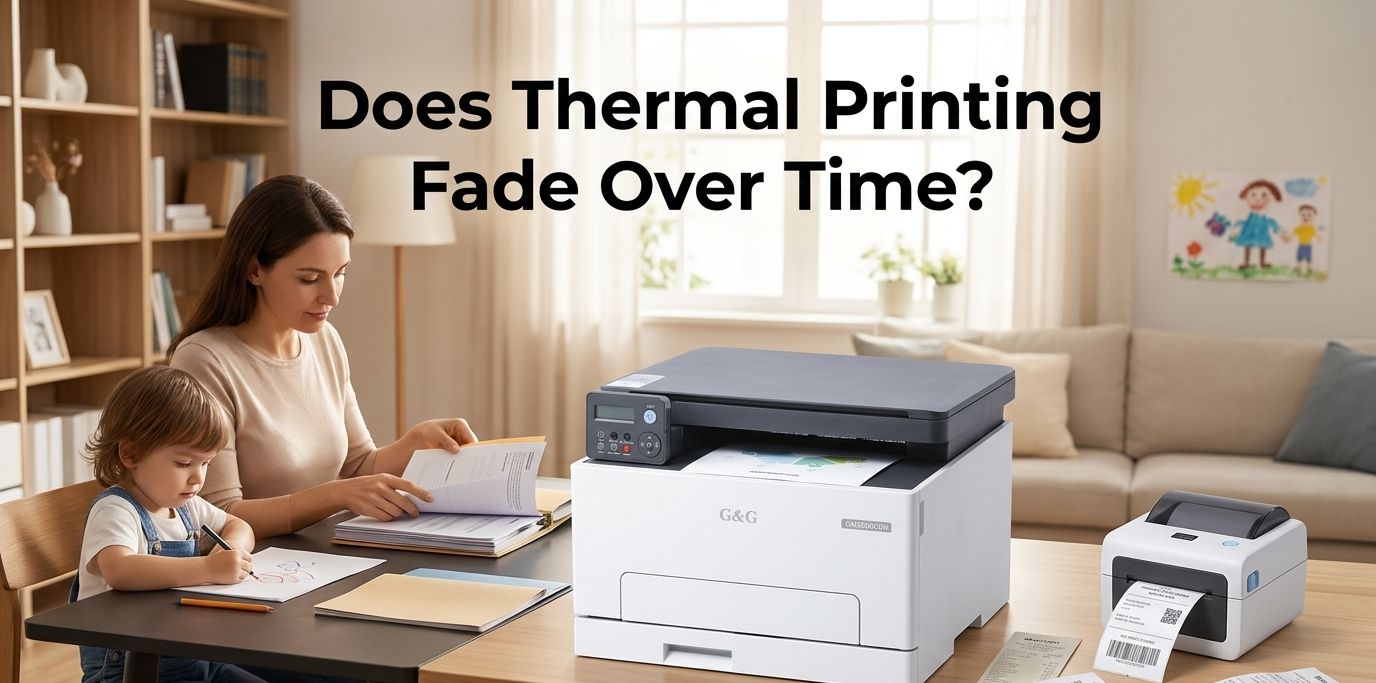
If you’ve ever looked at an old receipt and noticed it’s turning blank or gray, you’ve likely asked yourself: do thermal prints fade? The answer lies in the ink-free technology behind your thermal printer.
Why Do Thermal Prints Fade?
Unlike a standard inkjet printer that sprays liquid ink onto paper, a thermal printer works by using heat. Inside the printer, there is a printhead that heats up very precisely. When it touches your thermal printer paper, the heat triggers a chemical reaction in a special coating on the paper’s surface, turning it black to create your text or images. This is the key of thermal printing—it’s fast, quiet, and doesn't require messy ink cartridges.
However, because this process relies on a heat-sensitive chemical layer rather than a physical pigment like ink or toner, it is naturally more delicate. Think of it like a light-sensitive photograph: the same heat that created the image can, over time, continue to affect those chemicals.
Can Thermal Paper Keep Long?
When you are printing a receipt for your taxes or a label for a long-term storage box, you need to know if that information will still be there in six months, a year, or longer. The short answer is that most standard thermal printer paper is not designed to be "archival."
"Archival" means the paper and the image are chemically stable enough to last for many decades without significant deterioration. Standard receipts and shipping labels are designed for convenience and short-term use, not for permanent record-keeping.
Here is what you should expect:
Standard Thermal Paper: Under typical room-temperature conditions—away from direct sunlight and harsh chemicals—a high-quality thermal print can remain legible for several years. However, if it is exposed to heat or light, it can start to fade much faster, sometimes becoming difficult to read within months.
The Archival Misunderstanding: While there are specialized "top-coated" thermal papers available that offer higher resistance to heat and oils, even these have limitations compared to traditional document storage. If you need a document to last for 10 or 20 years, thermal technology is generally not the right choice.
For SOHO users and families, treat your thermal printer outputs as "short-to-medium-term" documents. If a record is essential for legal, medical, or long-term financial purposes, it is always a best practice to digitize it (scan or take a clear photo) for safe keeping.
Understanding that thermal printing is built for speed and efficiency—not permanent storage—helps you use the technology where it shines most: for day-to-day tasks like shipping labels, quick notes, and temporary receipts.
Practical Preservation Tips for Long-Lasting Prints
Now that you know what causes your prints to fade, let’s talk about how to protect them. You don't need a high-tech laboratory to keep your documents safe; most of the solutions are simple habits you can start today.
Here are the best ways to ensure your thermal printer outputs stay clear when you need them:
Store in a Cool, Dark Place: The best home for a thermal receipt or label is inside a file folder, a drawer, or an envelope. Keeping them out of direct sunlight and away from heat sources like radiators or electronics is the single most effective way to prevent premature fading.
Avoid Plastic: Be careful with where you store your documents. Avoid using PVC plastic sleeves or folders, as these can contain chemicals that react with the paper. Instead, opt for paper-based filing systems or archival-safe polypropylene sleeves if you need to keep them in a binder.
Keep Chemicals Away: Make sure your hands are clean and dry before handling important receipts. Residue from hand lotions, oils, or cleaning supplies can accidentally smudge or weaken the image.
Avoid Lamination: Never put thermal paper through a heat laminator. The extreme heat will turn the entire sheet black, effectively destroying the information you were trying to preserve.
Beyond Thermal: When to Consider Alternative Printing
While thermal printing is undeniably convenient for quick, ink-free tasks, it is important to recognize when it is not the right tool for the job. If you are preparing documents that need to be kept for years—such as permanent financial records, legal contracts, or cherished family documents—it is time to look at other options.
For tasks requiring true permanence, a laser printer is the standard. Here is why you might want to consider making the switch for your long-term storage needs:
Toner vs. Heat-Sensitive Coating: Unlike thermal paper, which changes color due to a chemical reaction, laser printers use toner—a fine powder that is permanently fused to the paper using heat and pressure. Because this process creates a physical, bonded layer of pigment on the paper, the text will not fade due to light, heat, or environmental exposure.
The Durability Advantage: If you use G&G Laser Printers, you get the benefit of crisp, durable text that can easily last for decades. Documents printed with toner are resistant to the common "enemies" of thermal paper; they won’t turn black in a hot room, and they won't fade if exposed to a little sunlight.
The Right Tool for the Right Task: Think of it like this: use your thermal printer for things that are temporary, like shipping labels, grocery lists, or daily receipts. Switch to a laser printer for anything that needs to "go the distance," such as tax returns, important contracts, or school projects that need to be kept in a portfolio.
By mixing both technologies in your home or office, you get the best of both worlds: the speed and low cost of thermal for the short term, and the reliable, long-term durability of a mono laser printer for everything else.
Ultimately, thermal printer printing is a fantastic tool for simplifying your home or office workflow. By choosing quality thermal printing paper and knowing when to use a laser alternative, you can enjoy the efficiency of thermal technology without ever worrying about your important information disappearing.