The Journey of Your Empty Cartridges
If you've ever felt guilty about throwing plastic away, you are not alone. Every single year, over 375 million empty printer cartridges end up in landfills across the globe. That equals more than 1 million cartridges tossed into the trash every single day! Left in a landfill, a single plastic cartridge can take up to 450 years to decompose, slowly breaking down into harmful microplastics and leaching chemical residue into the soil.
Here is the good news: your empty cartridges don't have to become pollution. When you return them through a certified program, they don't sit in a dump—they enter a closed-loop recycling system. High-grade empty plastic shells are carefully inspected, thoroughly cleaned, and rebuilt into fresh, factory-tested recycled cartridges. Any damaged or worn-out parts are crushed down into pure plastic and metal raw materials to make brand-new items. Nothing goes to waste.
The Quick Answer: When you drop off an empty unit at a certified collection spot or mail it using a prepaid return label, it gets turned back into usable raw materials or remanufactured into a high-quality replacement. But to make sure this actually happens, you must use verified, eco-certified recycling channels rather than single-use third-party services that dump their waste.
For decades, the standard way people handled empty printing supplies was simple: run out of ink, throw the plastic box in the trash, and buy a brand-new one. This linear "take-make-waste" model has created millions of tons of unnecessary plastic trash.
Closed-loop recycling completely changes this process. Instead of creating new plastic from crude oil every time, manufacturers collect used items and feed them back into the start of the production line. By choosing proper ink and toner cartridge recycling, you help keep high-grade plastics and valuable metals in a continuous loop of use, keeping tons of trash out of our oceans and landfills.
Why You Shouldn't Put Cartridges in Your Home Recycling Bin
It is very tempting to toss your empty printer ink and toner into your blue residential recycling bin along with your plastic milk jugs and soda bottles. However, doing this usually backfires.
Complex Mixed Materials: A single ink cartridge and toner cartridge contains up to dozen different materials, including hard plastic shells, rubber rollers, steel springs, and microchips. Municipal recycling sorting centers are built for simple items like aluminum cans and cardboard boxes—they do not have the equipment to break down complex electronics.
Residual Powder and Liquid Leaks: Empties are rarely completely dry. Leftover wet ink or fine toner powder can burst open inside municipal collection trucks, contaminating paper and cardboard around them and causing whole loads of recyclables to be sent straight to the landfill.
Specialized Handling is Required: To recycle a cartridge safely, it must go through dedicated processing facilities that safely wash away chemical residues and separate electronics from plastic.
Knowing how to recycle printer cartridges correctly means using dedicated drop-off sites or mail-back programs designed specifically for office electronics.
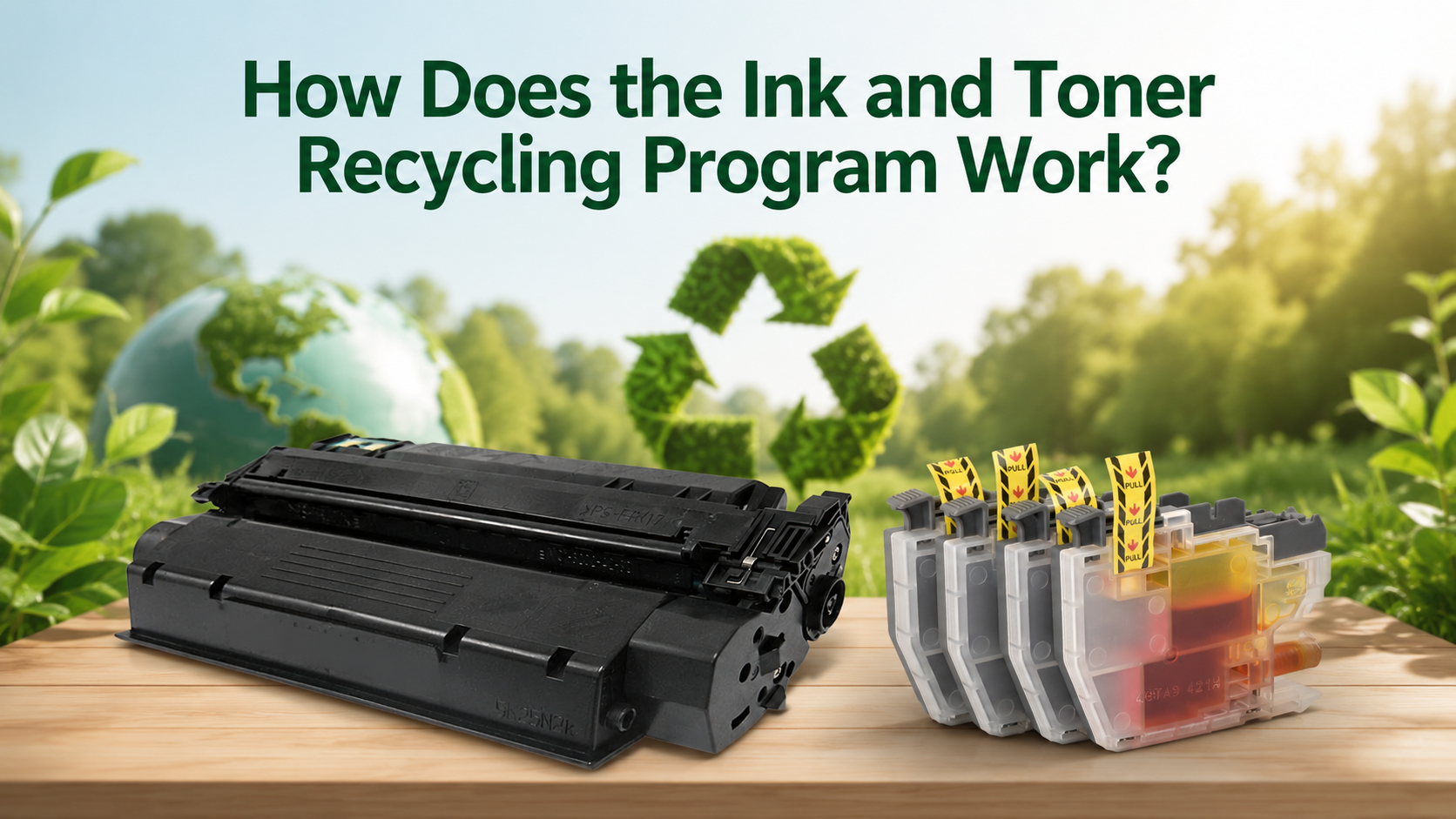
How Ink and Toner Recycling Program Work
Ever wonder what actually happens after you hand over your empty cartridge at a store or drop it in a collection box? It doesn't just get wiped down with a cloth and refilled on the spot.
Once your empties leave the collection point, they are shipped to dedicated recycling and remanufacturing facilities. Here, high-tech processes and skilled technicians make sure every part of the ink cartridge and toner cartridge is either restored to like-new condition or broken down into fresh raw materials.
Here is the step-by-step journey your cartridge takes behind closed doors.
Step 1: Inspection, Sorting, and Automated Cleaning
When thousands of returned cartridges arrive at the processing plant, they are sorted by brand, model, and condition.
Visual & Electronic Inspection: Technicians test each empty shell to see if it is structurally sound. They check the plastic body for cracks and test the tiny microchips to see if they can still communicate properly with a printer.
Sorting the Survivors: Cartridges with intact, high-grade plastic casings move on to become remanufactured units. Damaged or worn-out shells are set aside for material recovery (shredding).
Deep Cleaning: Before anything can be refilled or repurposed, all old, dried-up printer ink and toner residue must be removed. Automated air and fluid jets blow away leftover toner powder and flush out dry ink from delicate nozzles without harming the plastic shell.
Step 2 – Advanced Water Treatment and Material Separation
Proper recycling isn't just about saving plastic—it's also about protecting our water and soil from liquid waste.
Safe Water Treatment: Washing thousands of ink cartridges creates dirty wash water full of color pigments and chemical additives. Responsible facilities don't pour this down the drain. They use multi-stage filtration and water-treatment systems to extract the pigments, leaving behind clean water that can be reused in the facility.
Crushing and Material Sorting: What happens to cartridges that are too broken to be reused? They are fed into industrial shredders that chop them into tiny pieces.
Magnets & Air Separators: Powerful magnets pull out steel springs and metal screws, while air separators separate light plastics from metals like aluminum. These pure plastic pellets are then sold to manufacturers to create new electronics, plastic lumber, or office supplies.
Step 3 – Giving Cartridges a Second Life as a High-Quality Reman Unit
This is where true circular recycling happens. Instead of throwing away a perfectly good plastic casing, top-tier manufacturers rebuild it into a brand-new printing unit.
Precision Component Replacement: Critical moving parts—like worn-out rubber rollers, microchips, or seals—are replaced with fresh, high-precision parts.
Refilling with Premium Ink/Toner: The empty casing is refilled with high-grade ink or toner engineered to match exact factory specifications.
Rigorous Quality Testing: Every finished unit is print-tested to ensure it won't leak, smudge, or streak.
When this process is done right, the result is a reliable reman printer cartridge. It gives you the exact same crisp print quality and page yield as a brand-new original cartridge, but with a drastically smaller carbon footprint—and at a fraction of the cost.
When you consider that millions of homes, school desks, and small business offices replace their supplies every month, those single pieces quickly turn into thousands of tons of preventable plastic waste. The good news is that changing this story doesn't require a huge lifestyle overhaul—it just takes one small habit shift every time your printer runs low.
Recycling your printing supplies isn't just about managing waste—it's about making a conscious choice to support a cleaner, smarter, and more sustainable future. By taking a few extra seconds to return your empty ink cartridge and toner cartridge through a verified closed-loop program, you keep high-grade materials in use, lower your carbon footprint, and protect local ecosystems for generations to come.