The Short Answer: If you print just 100 to 150 pages a month, a
higher-priced, advanced printer will actually start saving you money in 2
to 6 months.
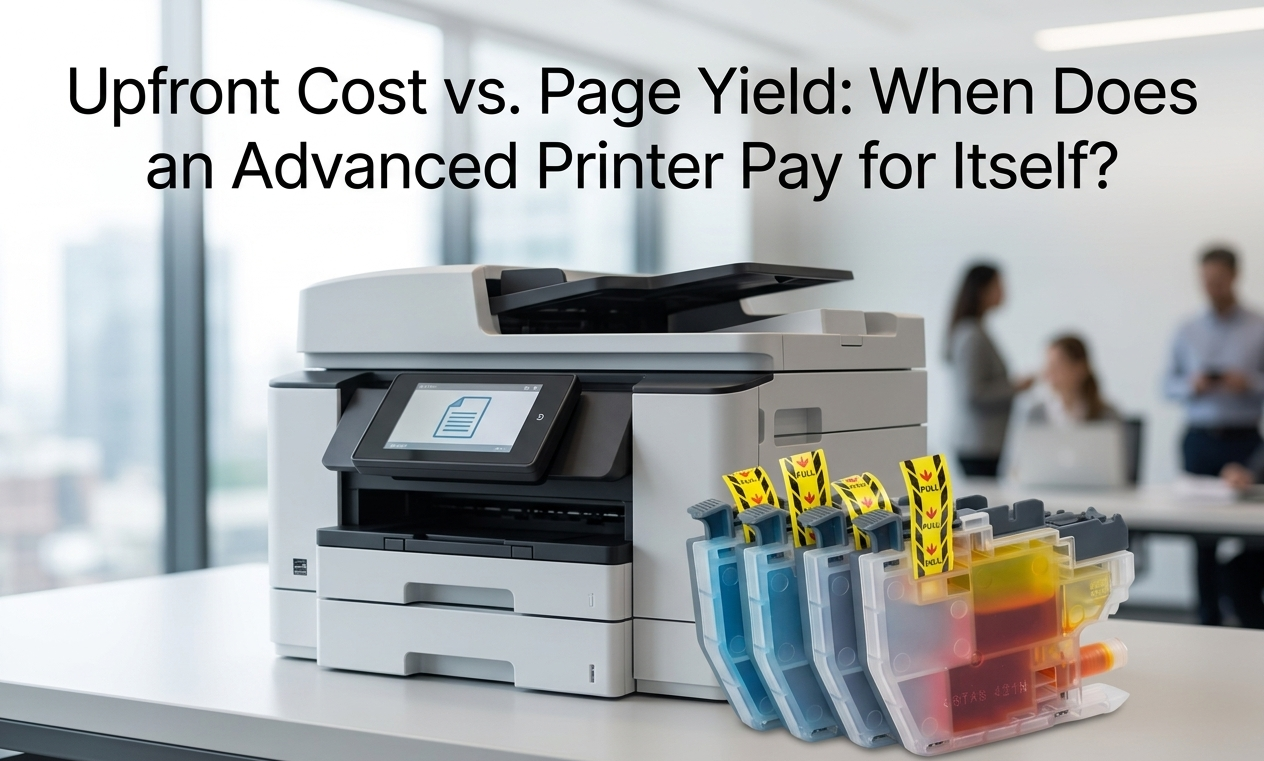
Here is why: cheap budget printers are a trap for your wallet. They might only cost $50 upfront, but they lock you into an astronomical running printer cost of 15 to 20 cents per page. On the flip side, an advanced high-capacity or ink tank printer costs more at the register, but it drops your ongoing cost to less than 1 cent per page. That massive gap means the advanced printer quickly pays for itself and saves you hundreds of dollars down the road.
Why Are Printer Inks So Expensive?
The answer lies in a classic business strategy called the "Razor and Blade" model. Printer manufacturers often sell their entry-level printers at a average. They aren't making money on the cost of printer hardware; they are practically giving the printers away so they can hook you into buying their specialized, high-priced ink cartridges for the next few years. The real profit isn't in the plastic devices sitting on your desk—it's in the liquid inside those tiny tanks.
When you buy a rock-bottom budget printer, you are essentially signing up for a subscription service you didn't want. Because these budget cartridges hold only a tiny droplet of ink, they run out incredibly fast.
If you are constantly running out to match local retail prices—like standard office depot printing cost benchmarks—you'll quickly realize that printing a few school projects or business reports at home on a cheap machine is costing you a fortune. You might think you saved money on day one, but within just a few months, the cost of replacement ink will completely eclipse what you originally paid for the printer.
Print Page and Page Yield:Why Your Cartridge Runs Out Faster Than Expected
When you look at a box of ink or toner, you will always see a number telling you exactly how many pages that cartridge is supposed to print.
But then, after printing just a few school reports or work documents for a couple of months, the ink low warning pops up again. Why is there such a massive gap between what the box promises and what you actually get?
It all comes down to how a print page yield is calculated. The entire printing industry uses a standard baseline set by the International Organization for Standardization (ISO). To test a cartridge, they print a very basic, simple document until the ink runs out. Crucially, this test document only covers exactly 5% of the page with ink. To put that in perspective, 5% coverage is roughly a short, double-spaced email or a few paragraphs of text. It does not include any bold headers, large logos, or images.
Knowing Your Real-World Color Pages to Print
In the real world—especially for families, students, and work-from-home professionals—almost nobody prints at 5% coverage.
Think about the actual color pages to print that cycle through your home or small office:
A student's school project with full-color charts and diagrams.
A real estate flier or business presentation deck with rich background colors.
A downloaded PDF document with heavy formatting and bold text.
A single full-page color photo or a graphic-heavy school report can easily hit 40% to 80% ink coverage. This means you are using up to 16 times more ink per page than the manufacturer's laboratory test used!
The Numbers: 15 Cents vs. 1 Cent Per Page
When you are at the store, the price tag on the box is the only number you see. But if you want to save real money, you have to look at the "hidden" price tag: the Cost Per Page (CPP). This is where the math gets really interesting for families and professionals.
Now, look at an advanced printing system, like a high-capacity tank printer. The printer itself costs more upfront, but the ink comes in large bottles or massive tanks. Because you get so much more ink for your money, your cost per page plumments to less than 1 cent.
The Financial Tipping Point
You might wonder, "Is it worth paying $200 extra for the better printer?" Let’s look at the "Tipping Point"—the moment the expensive printer actually becomes the cost-effective option.
Printing Volume | Budget Printer ($0.15/page) | Advanced Printer ($0.01/page) | Your Monthly Savings |
50 pages/month | $7.50 | $0.50 | $7.00 |
150 pages/month | $22.50 | $1.50 | $21.00 |
300 pages/month | $45.00 | $3.00 | $42.00 |
If you are a student or a professional printing around 150 pages a month (just 5 pages a day!), you are saving over $20 every single month. Within less than a year, those savings will have completely paid back the extra money you spent on the advanced machine. Everything after that is pure profit in your pocket.
Smart Refilling: The G&G Cartridge Solution for Every Tier
No matter which type of printer you decide to use, you shouldn't have to overpay just to get crisp, clear prints. If you already own a budget printer and aren't ready to upgrade just yet, or if you want to keep your advanced printer running at the absolute low cost possible, there is a smart shortcut: choosing high-quality alternative cartridges.This is where a premium G&G cartridge comes into play.
G&G offers precision-engineered ink and toner replacements designed to deliver professional-grade results without the steep manufacturer markup.
Ultimately, saving money on printing isn't just about the machine you buy today; it's about the choices you make every time you refill. By understanding your real-world page yields and picking smart, high-capacity printing solutions, you can keep your home or office running smoothly without draining your wallet.