The New HP LaserJet Pro 4000/4100 Series: Who It's For
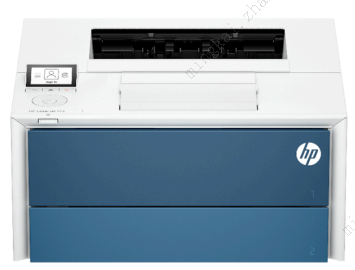 In April 2026, HP rolled out its next-generation LaserJet Pro 4000/4100 series: the LaserJet Pro 4006 and MFP 4112 in North America and Canada, and the LaserJet Pro 4007 and MFP 4113 in Europe. The launch sits inside a larger strategic push HP announced at its Imagine 2026 event, aimed at small and mid-sized businesses that often don't have a dedicated IT team managing their fleet.
That target market matters for how this printer generation is built. These are compact, single- or multi-function devices meant for teams of roughly 3 to 10 people printing up to a few thousand pages a month, with a duty cycle ceiling around 80,000 pages. The single-function models (4006/4007) print only; the MFP models (4112/4113) add copy, scan, and fax. Both run on Wi-Fi 6 and carry a three-year warranty.
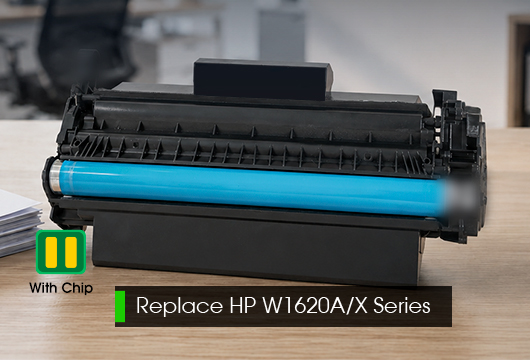
The cartridges are region-specific: W1610A/X (161A/161X) for North America and Canada, and W1620A/X (162A/162X) for Europe. Same printer platform, same internal hardware, but different consumable part numbers depending on where the unit is sold. Buyers replacing toner for the first time should confirm which cartridge matches their printer's region before ordering, since the two aren't interchangeable.
How We Got Here: Three Generations of Cartridge Design
Compatible toner development doesn't start from zero with each launch. It builds on what came before. Tracing the lineage for this printer family:
Generation | Cartridge | Region | Printer series |
Two generations back | CF258A/CF258X (58A/58X) | North America | HP LaserJet Pro M304/M404n/dn/dw; MFP M428dw/fdn/fdw |
CF259A/CF259X (59A/59X) | Europe |
Previous generation | W1480A/X (148A/148X) | North America | HP LaserJet Pro 4001 / MFP 4101 |
W1490A/X (149A/149X) | Europe | HP LaserJet Pro 4002 / MFP 4102 |
Current generation | W1610A/X (161A/161X) | North America / Canada | HP LaserJet Pro 4006 / MFP 4112 |
W1620A/X (162A/162X) | Europe | HP LaserJet Pro 4007 / MFP 4113 |
Region-specific cartridge numbering isn't new to this generation. HP has split North America and Europe SKUs for at least the last two product cycles. What is new this time is what's inside the cartridge.
What Actually Changed Inside the Cartridge
This is where the current generation breaks from its predecessors in a way that matters more than the part number change.
The development method changed. Earlier generations of this monochrome cartridge line used a magnetic roller (MR) development system with magnetic toner. The new W1610/W1620 cartridges move to a development roller (DR) system running non-magnetic toner, a shift HP has used elsewhere in its lineup but hasn't previously brought to this monochrome product line. That switch changes more than terminology: non-magnetic single-component toner behaves differently under heat, which is part of why fusing temperature drops substantially in this generation, and transfer rates increase.
The cartridge itself is smaller. Independent lifecycle analysis of HP's TerraJet cartridge line found that the 4000-series cartridge carries roughly 25% less material per unit than its predecessor. A smaller housing means tighter internal tolerances: less room for error in how toner is metered, sealed, and delivered consistently across the cartridge's rated life.
The toner formula is more efficient, and less forgiving. HP states the new TerraJet formulation delivers about 11% more pages using less toner, part of a broader 25% reduction in ongoing print costs compared to the prior generation. Squeezing more output from less material leaves less room for error— in particle size, charge consistency, and how the toner flows.
Why This Generation Raises the Bar for Compatible Toner
Put those three changes together:
A new development mechanism (DR instead of MR)
A smaller cartridge with tighter tolerances
A denser, more efficient toner formula.
It adds up to a meaningfully different engineering problem than the last few generations of this printer line. A supplier can't simply resize an existing MR-based formula into a smaller shell and call it compatible; the development method itself has changed, which affects everything downstream, including charge behavior, fusing, transfer, and ultimately print quality and page yield.
This is a large part of why, in the months since this printer generation launched, stable compatible toner options for the W1610/W1620 platform have been slow to reach the market. Getting a compatible cartridge right here means re-engineering the toner formula and cartridge structure from the ground up rather than adapting a prior design.
What to Look For in a Compatible Cartridge for This Generation
Given the above, a few things are worth checking before choosing a supplier for W1610/W1620 compatible toner:
● Declared yield tested to ISO/IEC 19752, the same yield measurement standard HP uses, so page-count claims are comparable rather than aspirational
● Toner formulated specifically for non-magnetic, development-roller systems, not a formula carried over from the MR-based predecessor
● Manufacturing under ISO 9001 / ISO 14001 certification, for consistency across production batches
G&G's Compatible Patented Toner for HP W1610A/X and W1620A/X
G&G has developed compatible cartridges built specifically around this generation's development method and cartridge structure, not adapted from the previous MR-based design.
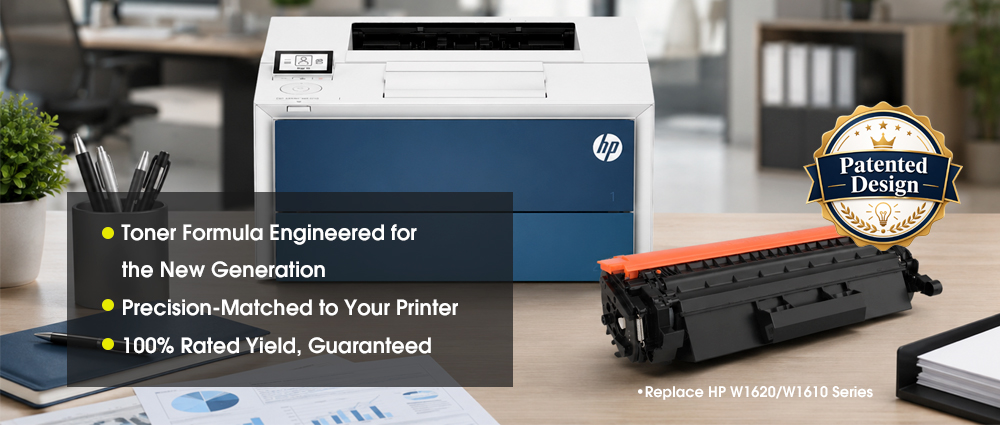
● Custom-formulated toner engineered for high transfer rate, strong fusing, rich density, and sharp, clean text output on the new development-roller system
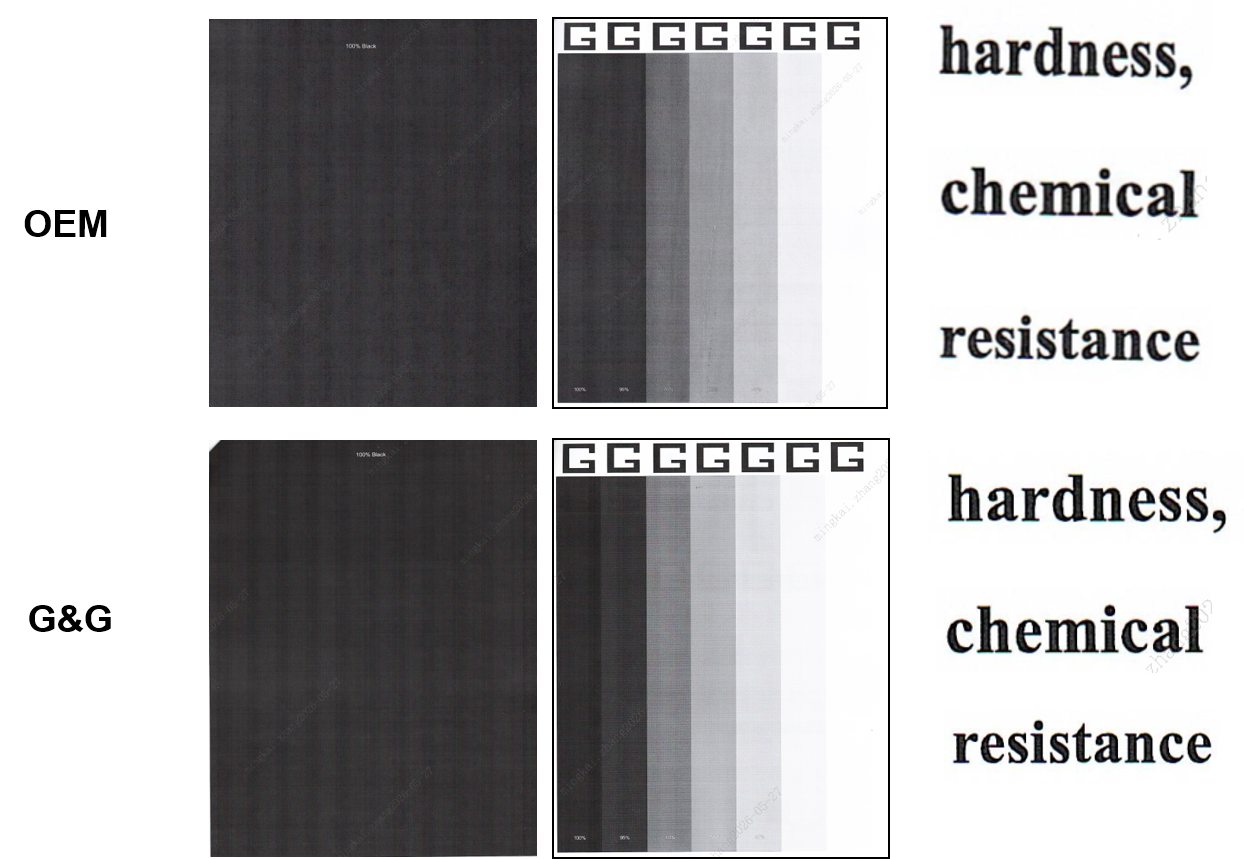
Rather than describing the difference, here's a side-by-side comparison: the same test document printed from an original HP cartridge and from G&G's compatible cartridge on the same printer.
● Proprietary structural design built to match the smaller cartridge footprint precisely, maintaining a tight fit with the original printer hardware
● 100% rated page yield, tested against ISO/IEC 19752
OEM Model | Area | G&G Model | Page Yield | For Use In |
OEM | G&G |
W1610A | CA/ANZ | GG-PH1610C | 3,000 | 3,000 | HP LaserJet Pro 4006 series; HP LaserJet Pro MFP 4112 series |
W1610X | GG-PH1610XC | 10,000 | 10,000 |
W1620A | EMEA | GG-PH1620C | 3,000 | 3,000 | HP LaserJet Pro 4007 series; HP LaserJet Pro MFP 4113 series |
W1620X | GG-PH1620XC | 10,000 | 10,000 |
For IT buyers and resellers evaluating this printer generation, the compatible toner question isn't whether it's legal or safe. That's well established. That's already established. The real question is simpler: did the supplier actually re-engineer their cartridge for what changed, or just repackaged an old formula? That's what decides whether it holds up for daily use.
If you're sourcing toner for the W1610A/X or W1620A/X platform, we're happy to walk through the specifics of how G&G's cartridges are built for this generation, including yield testing data and manufacturing certifications. Get in touch with our team.