Zhuhai, China holds an official title few cities can claim: Print Consumables Capital of the World. Designated by the China Computer Industry Association in 2010, the city now produces an estimated 70% of the world's compatible ink and toner cartridges — the latest chapter in an industry that has been repeatedly reshaped since Johannes Gutenberg first put movable type into mass production.
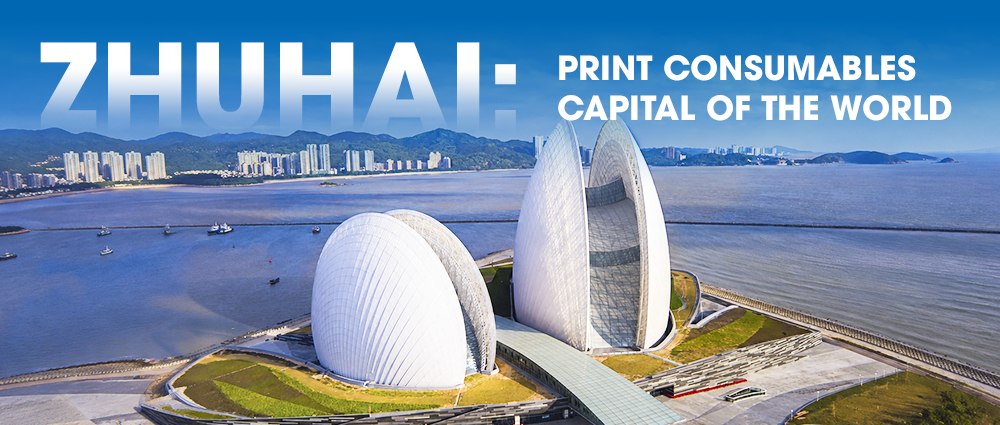
*Zhuhai, China — home to the world's largest concentration of print consumables manufacturers
What Is the "Print Consumables Capital of the World"?
Print Consumables Capital of the World is a formal title, not a marketing phrase. In 2010, the China Computer Industry Association designated Zhuhai the Print Consumables Capital of the World, recognizing what had become one of the highest concentrations of printer consumables manufacturers anywhere: chip design, ink and toner formulation, injection molding, full cartridge assembly, and recycling, largely within the same supply chain radius.
Zhuhai by the numbers
Source: Zhuhai Special Zone Daily, May 19, 2026 (research contribution from the Zhuhai Institute of Private Economy Development)
Metric | Figure |
Share of global compatible print consumables market | 70% |
Cumulative patents held in the sector | 7,000+ (80%+ of China's total in this field) |
Global color ribbon production share | 80% |
Global compatible ink cartridge production share | 68% |
Global universal toner cartridge production share | 40% |
Above-designated-size industrial enterprises in Zhuhai's high-end printing sector | ~100 |
Annual output value of that sector | ~RMB 20 billion |
Export markets | 150+ countries and regions |
By most industry accounts, the cluster is also uniquely vertically integrated — chips, toner and powder, molds, finished cartridges, and recycling all within one supply chain — with Latin America, Southeast Asia, the Middle East, and Africa now its fastest-growing export markets.
How Did Printing's Disruptors Lead to Zhuhai?
In 1440, a goldsmith in Mainz named Johannes Gutenberg built a machine that would change the world. His printing press took the written word out of the hands of monks copying manuscripts by candlelight and put it into mass circulation — books, newspapers, everything that followed. Gutenberg himself never made a fortune from the invention; patents as we know them didn't exist yet, and imitators moved faster than he could. But the principle behind his press — movable type, repeatable, scalable — stayed largely unchanged in printing for the next four hundred years, and the industry has never really stood still since.
For most of the 20th century, "printing" in an office meant typewriters, carbon copies, and the occasional trip to the typing pool — until computers, dot-matrix printers, and eventually laser printers changed the workflow within a generation. HP was among the first real disruptors of that new era: it priced office printers to sell and built the business model around the cartridge instead. Printers got cheap. Consumables became the profit center. Xerox and a string of established copier manufacturers spent the following decade adjusting to a market that no longer worked the way they'd built it to.
Every disruption eventually invites its own. Almost as soon as HP's cartridge-based model took hold, small, technically minded operators realized a used cartridge didn't have to be thrown away — it could be refilled, remanufactured, and sold again at a fraction of the OEM price. Trade publication The Recycler reported that at its peak, the compatible ink tank market held roughly 60% share in parts of Africa and Asia, concentrated especially around Epson-compatible products — a 2017 figure that marked how far the aftermarket had come from its garage-operation beginnings. The OEMs did not take this quietly: the 1990s and 2000s saw some of the most aggressive patent litigation in the history of office technology, and some of the biggest OEM names from that era are gone from the market entirely today.
The companies that survived that gauntlet shared a few things: patient capital, real engineering investment rather than just undercutting on price, and — increasingly — a manufacturing base inside the cluster that, in 2010, would be named the world's print consumables capital.
Why Do International Buyers Keep Coming Back to Zhuhai?
The clearest evidence that Zhuhai's reputation is earned rather than claimed comes from buyer behavior, not marketing copy. According to RTM World's official exhibition whitepaper, RemaxWorld Expo — the industry's largest global trade show, held annually in Zhuhai since 2007 — draws professional buyers from 101 countries each year, with more than 210,000 industry visitors having attended cumulatively. More tellingly, 41.2% of overseas visitors have attended three or more times: a repeat-visit rate that's hard to manufacture through advertising alone.
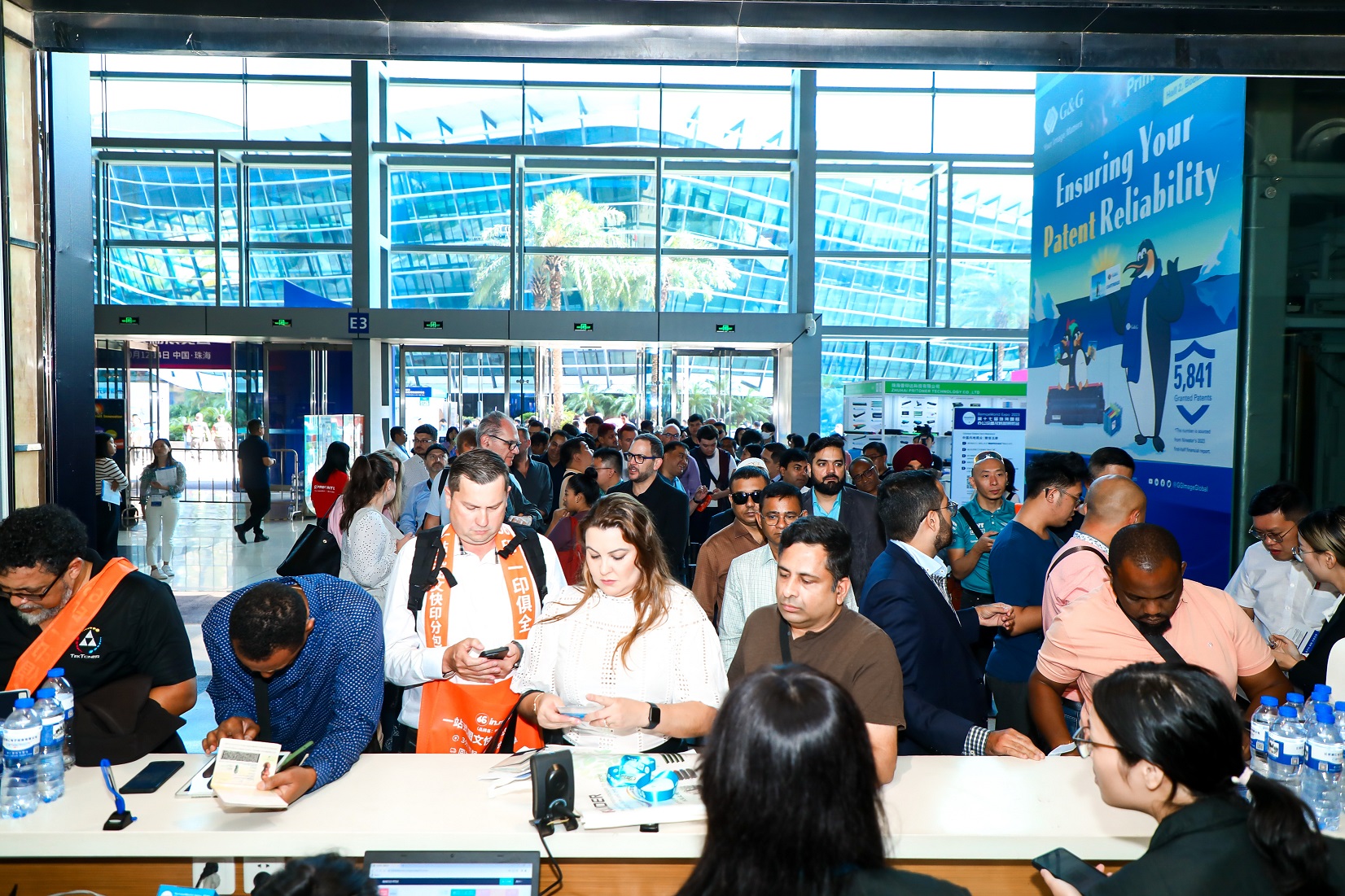
*Overseas buyers at RemaxWorld Expo — 41.2% of international visitors return three or more times
Part of the reason is structural. Buyers describe Zhuhai as a one-stop sourcing destination — a place where a single trip can cover cartridges, toner, chips, and finished consumables across categories that would otherwise require sourcing from several countries. Many overseas visitors extend their trip into factory tours after the show, a "front store, back factory" pattern that turns a single visit into direct, first-hand verification of the supply chain — reinforcing the Zhuhai-equals-consumables association through experience rather than claims. Delegations from other major trade events, including Canton Fair buyer groups, now organize dedicated trips into Zhuhai's industrial belt for the same reason.
Where Does G&G Fit Into Zhuhai's Print Consumables Industry?
G&G is one of the companies that grew up inside that cluster. It was founded in 2000 as an inkjet supplies business, and the technical bet paid off early: by 2002, G&G had developed its own universal chips for inkjet cartridges — the kind of engineering investment that separates a real manufacturer from a reseller. That work made G&G a global leader in compatible inkjet supplies by 2004, the same year it began R&D on laser cartridges. Three years later, in 2007, G&G had become a leading supplier of compatible laser toner cartridges too — moving from a single product category to covering both of the industry's major cartridge types inside a decade.
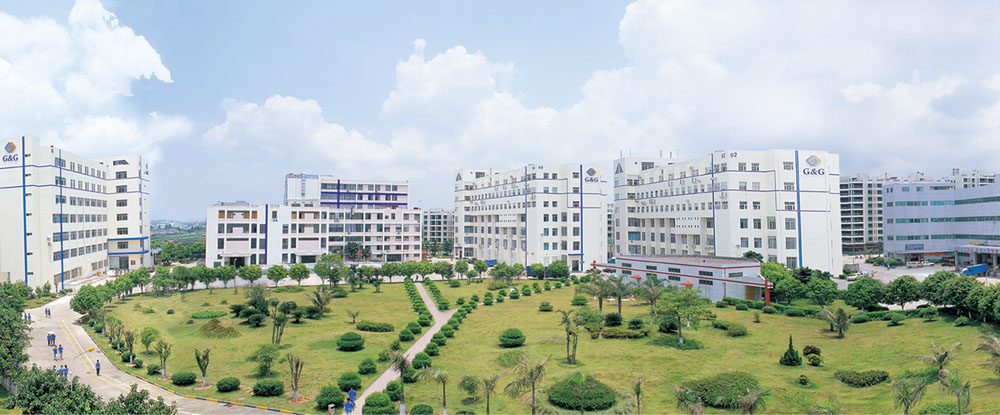
*Where it started: G&G's first facility, 2000
That manufacturing discipline is backed today by ISO 9001, IECQ QC 080000, and a handful of other international certifications — the specifics are worth their own article, but the short version is that G&G now serves more than 200 million consumers in over 170 countries. G&G operates as part of Pantum Technology (former name: Ninestar Corporation), alongside sister brands Pantum, Geehy, and Apex — and it has been included in China's central government procurement catalog for 15 consecutive years, a domestic credibility marker that isn't easily bought.
G&G Image Global is an ISO-certified, leading Zhuhai-based printer consumables brand, built in the world’s most important cartridge manufacturing hub and trusted by more than 200 million consumers in 170+ countries for OEM-level quality.
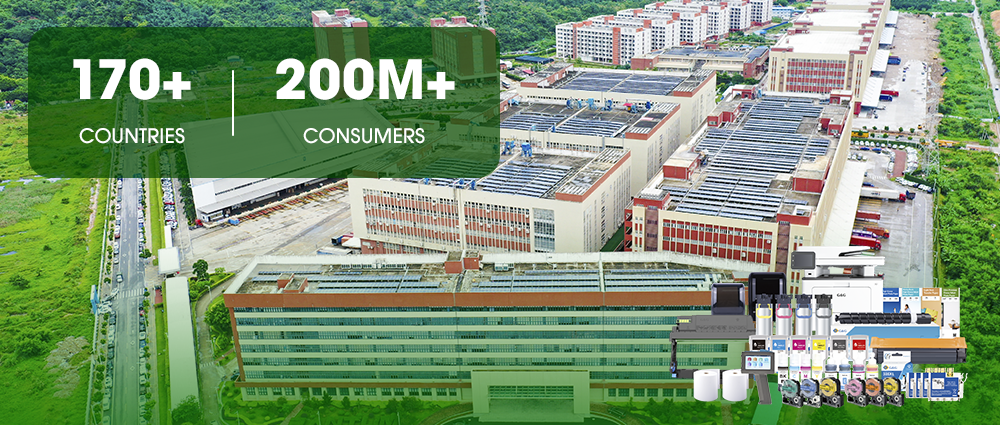
*G&G today: ISO-certified, OEM-matched, serving 170+ countries
So Where Does This Leave the Printing Industry?
Disruption here has never been a single event. It's been Gutenberg's press outlasting the scribes, HP's cartridge model outlasting the duplicator, and remanufacturing outlasting the OEMs who tried to litigate it out of existence. Each wave built on the one before it, and each one moved the center of gravity a little further — reinforced, this time, not just by manufacturing scale but by tens of thousands of buyers who keep coming back and verifying it in person.
Right now, that center of gravity sits in Zhuhai — and G&G has spent two decades building inside it.
Frequently Asked Questions
Why is Zhuhai called the "Print Consumables Capital of the World"?
The China Computer Industry Association formally gave Zhuhai this designation in 2010, recognizing it as home to one of the highest concentrations of printer consumables manufacturers anywhere — spanning chip design, ink and powder formulation, injection molding, and full cartridge assembly.
When was G&G founded?
G&G was founded in 2000 as an inkjet supplies business. It developed its own universal inkjet chips by 2002, became a global leader in compatible inkjet supplies by 2004, and expanded into laser toner cartridges by 2007.
Why is RemaxWorld Expo held in Zhuhai?
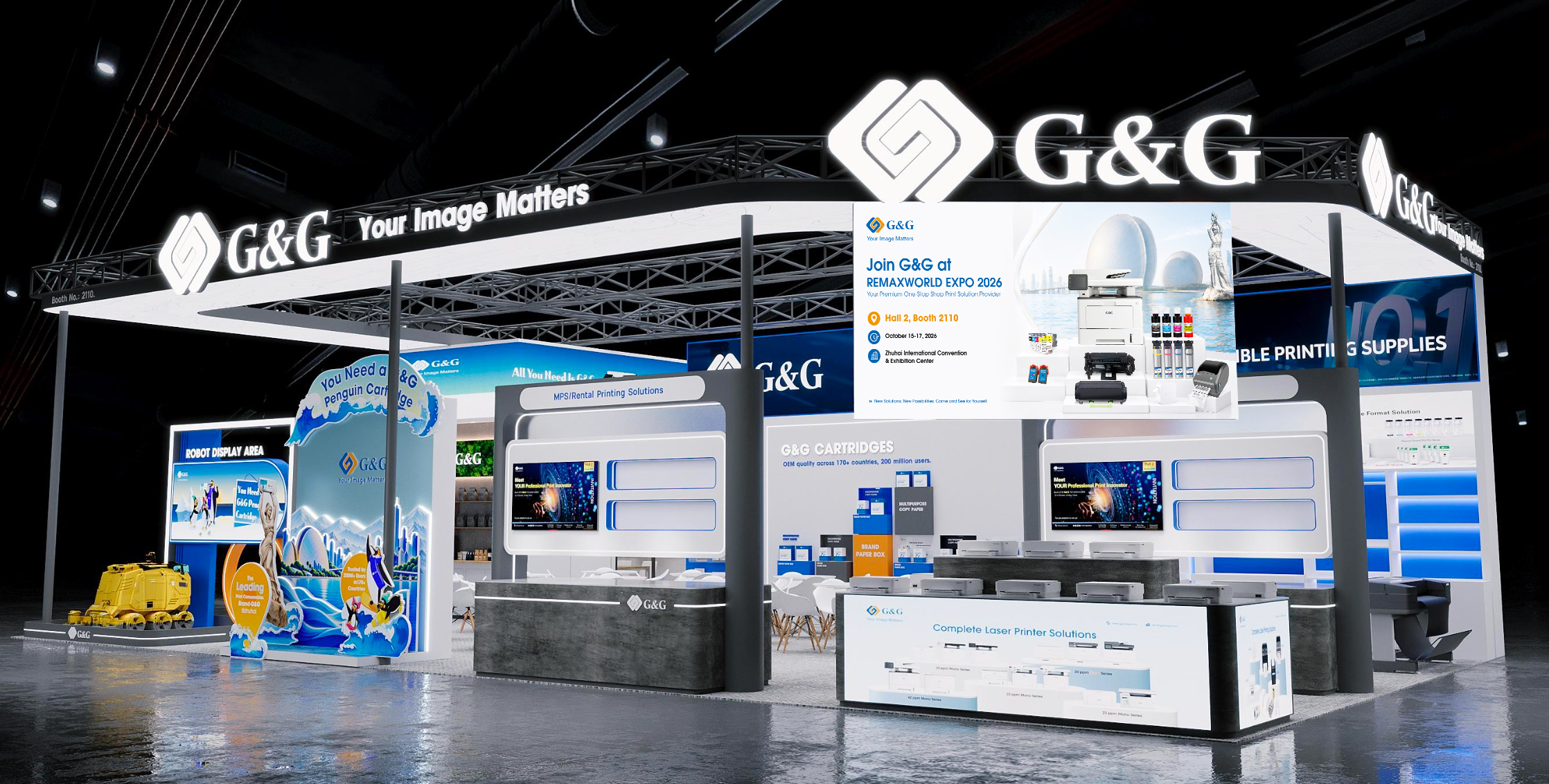
RemaxWorld Expo, the printing industry's largest global trade show, has been held annually in Zhuhai since 2007 — a direct reflection of the city's concentration of cartridge manufacturers. The 2026 edition marks its 20th anniversary and runs October 15–17 at the Zhuhai International Convention & Exhibition Center.
Why do international buyers keep returning to Zhuhai?
According to RTM World's exhibition whitepaper, 41.2% of RemaxWorld Expo's overseas visitors have attended three or more times. Buyers commonly cite the ability to source cartridges, toner, and chips across categories in a single trip, and many extend their visit into direct factory tours to verify the supply chain firsthand.